
Top Mistakes Exporters Make When Dealing with Brokers or Freight Forwarders
In global trade, a reliable broker or freight forwarder can be your strongest ally — or your biggest liability. Whether you’re exporting petrochemicals, industrial equipment, or consumer goods, one misstep in communication or documentation can lead to delays, fines, or even lost shipments.
In this guide, we’ll break down the most common mistakes exporters make when dealing with brokers and freight forwarders, and show you how to avoid them.
1. Failing to Vet Your Broker or Freight Forwarder
Many exporters choose a broker based on price alone. This can be risky.
What to do instead:
Verify licenses with official registries (FMC’s Licensed Ocean Transportation Intermediaries List).
Check customer reviews and trade references.
Confirm experience in your specific commodity (e.g., hazardous petrochemicals).
2. Incomplete or Inaccurate Documentation
Documentation errors are a leading cause of shipment delays.
Examples:
Wrong HS code for a petrochemical product.
Missing certificate of origin.
Incorrect consignee details.
Pro Tip: Use a document checklist and have it reviewed by your broker before shipment.
3. Ignoring Incoterms
Misunderstanding Incoterms can lead to disputes over cost and risk responsibilities.
Example: Under CIF, the exporter covers insurance — but under FOB, the buyer does.
Resource: ICC Incoterms 2020 Official Guide
4. Not Clarifying Service Scope
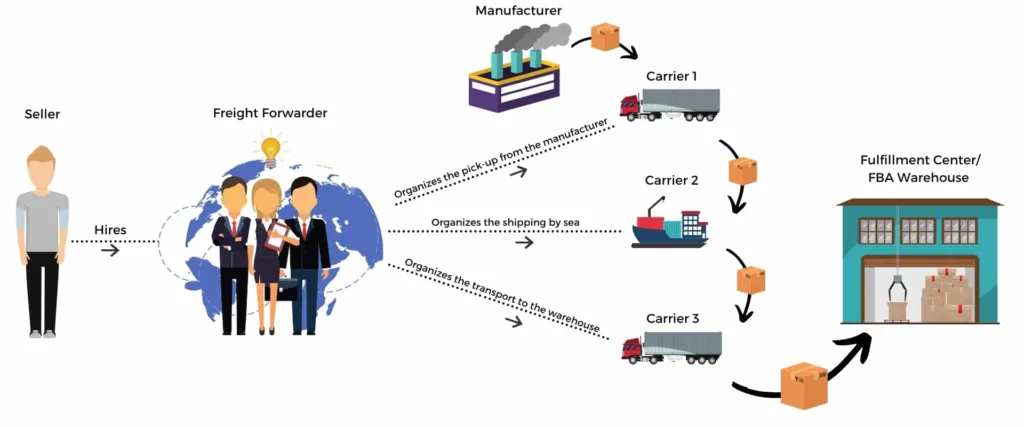
Some exporters assume freight forwarders handle everything — from customs clearance to last-mile delivery.
Solution: Clearly define:
Who books insurance
Who arranges inland transport
Who handles customs brokerage
5. Poor Communication
Not updating your broker about changes in product specs, packaging, or delivery timelines can cause missed sailings.
Best Practice: Maintain a single point of contact and set weekly status updates.
6. Not Understanding Hidden Costs
Some freight forwarders quote low rates but add surprise fees (terminal handling, documentation, or demurrage).
Tip: Ask for an all-in quote with a breakdown of every charge.
7. Lack of Compliance Knowledge
Especially for petrochemical exports, failure to comply with dangerous goods regulations (IMDG Code, IATA DGR) can lead to legal trouble.
External Resource: IMO IMDG Code Overview
8. Relying on One Forwarder or Route
Putting all your shipments through one forwarder can be risky if they face operational issues.
Diversify partners and routes for resilience.
9. Ignoring Cargo Insurance
Some exporters skip insurance to save costs — until they face a damaged cargo claim.
Recommendation: Always opt for cargo insurance, especially for high-value exports like petrochemicals.
10. Not Tracking Shipments Proactively
Relying solely on your broker’s updates can leave you in the dark.
Use independent tracking tools (MarineTraffic or CargoTracking) to monitor movements.
Choose the Right Partner – Verify licenses, track record, and industry expertise before working with a broker or freight forwarder.
Accurate & Complete Documentation – Use a checklist to avoid paperwork errors that cause shipment delays.
Clarity on Responsibilities & Costs – Define exactly what services are included and request an all-in quote with no hidden fees.
Compliance & Insurance – Understand Incoterms, follow dangerous goods regulations, and always insure your cargo.
Proactive Communication & Tracking – Keep your broker updated on changes and use independent tracking tools to monitor shipments.
- Contact Us today and get connected with producers and export-ready logistics.
- Info@PetroExportHub.com
Related posts
Mono Ethylene Glycol (MEG) serves as a cornerstone for modern antifreeze and coolant formulations, offering reliable freezing protection and heat resi . . .
Explore Solvent 100’s specs, uses, and export opportunities from Iran. Ideal for paint, ink, and adhesive buyers in India, Turkey, UAE, and Africa. . . .
Explore everything you need to know about exporting sulphur from Iran in 2024 — including types, packaging, documents, ports, prices, and top import . . .
Explore Iran’s top ports for petrochemical exports, including Bandar Imam Khomeini, Assaluyeh, and Bandar Abbas. Compare infrastructure, accessibili . . .
Learn the key differences between polypropylene (PP) and polyethylene (PE), their applications, advantages, and how to choose the right polymer for yo . . .
Discover how a Turkish plastics manufacturer reduced costs by 22% through importing HDPE from Iran. Real-world case study by PetroExportHub. . . .
Learn why Iran is a leading exporter of polyethylene (PE). Discover grades, global applications, and how PetroExportHub connects buyers with top suppl . . .
We are here to answer your questions....
Petro Export Hub
PetroExportHub specializes in the export of premium-grade petrochemicals, minerals, and industrial chemicals from Iran, serving international markets with reliability, transparency, and tailored logistics solutions
Tehran Office
Phone:
0214865484 | +989127607241
Address:
Tehran..
China Office
TEL :
0211400
Address:
Zhongzhou Bie Lu, Zhongcheng Street, Yiwu City, Zhejiang Province, China
Quick Access
Quick Access
- Contact Our Sales Team
- Frequently Questions
- Shipping & Logistics
- Become a Partner
- Certificatins & Quality